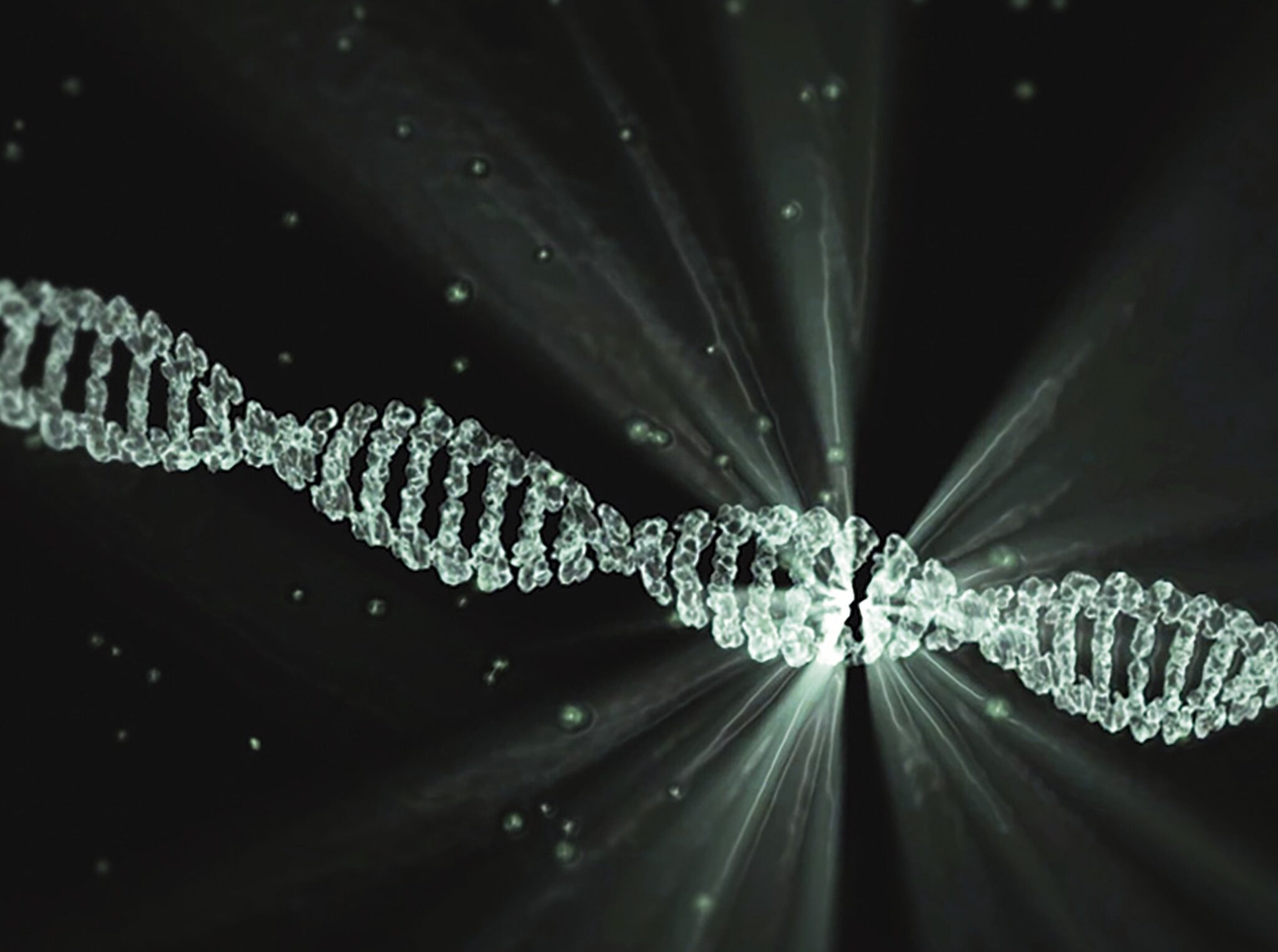
In late 2019, a quiet biophysics presentation asked an unusual question.
What if DNA is more than a static blueprint?
What if it is not only inherited—but responsive?
DNA is an electrical structure. It carries charge, vibrates, and exists within a constantly shifting field of chemical and electromagnetic activity. That much is well known. What intrigued researchers was the suggestion that DNA—under certain laboratory conditions—appeared to react when surrounding electromagnetic fields changed, even when removed from living cells. When the field changed, the response shifted. When the signal stopped, the response faded.
No bold declarations followed. No grand theory emerged. The work did not move forward into wider publication. And then—silence.
Whether this was a dead end, a methodological failure, or simply research that could not yet be measured remains unknown. But the question lingered.
Similar questions had surfaced before. Nobel Prize–winning virologist Luc Montagnier, late in his career, explored whether DNA and water might carry faint electromagnetic signatures. His work was controversial and largely dismissed—but never entirely explained away.
Taken together, these ideas do not replace genetics. They gently loosen its edges.
Modern biology already tells us that life is not a closed system. Genes respond to environment; expression changes; signals matter. Epigenetics reminds us that inheritance is not destiny—it is context.
One unpublished line from the 2019 research reportedly offered a metaphor, not a conclusion:
If DNA is responsive, then life may not only be inherited—it may be activated.
At the edges of biology, a new field—quantum biology—has begun to show that life sometimes uses subtler physical effects than once believed, from photosynthesis to animal navigation. These discoveries do not suggest magic, but they do suggest that life is more sensitive than we imagined.
So, the question remains—not as belief, but as curiosity:
So perhaps the most important question is not whether DNA receives signals—but whether life itself is more responsive than we once believed. Genetics may set the stage, but the story continues in dialogue with the world around us. What shapes us may not end at birth, but unfold continuously, moment by moment, in ways science is only beginning to notice.
Researched by K. Belik
References:
- Montagnier et al., Electromagnetic signals are produced by aqueous nanostructures derived from bacterial DNA sequences (2009) PubMed
- Lambert et al., Quantum effects in biology: functional roles in photosynthesis and magnetoreception (review) Astrophysics Data System